Understand what a Super El Niño demand shock means for India's agri-input portfolio
Domestic agrochemical demand fell 19.3% in the 2023-24 El Niño — and that was only classified "strong," not Super. With Super El Niño conditions tracking for 2026 and dealer channel feedback lagging the ground by 4–6 weeks, the window to act is measured in weeks, not quarters.
You'll gain insights into:
- Why 2026 is a portfolio-level event — what a compressed, dislocated sowing season means for pesticide and herbicide demand across the geographies that carry the bulk of India's agri-input sales.
- The historical demand pattern from 2023–24, why 2026 conditions are materially worse, and what channel inventory piling up 15–20% across the sector means for working capital locked in dead stock.
- How agri-input companies are currently operating without real-time crop visibility, and what that information lag costs by the time dealer orders reflect what already happened on the ground.
What you'll find inside the report

The portfolio at risk
India's domestic agrochemical demand fell 19.3% in 2023–24 — a "strong" El Niño, not Super. This section maps exactly where demand exposure concentrates — by crop type, by district, and by product category — before the monsoon stress arrives.

Why demand collapses arrive as a surprise
Dealers order conservatively weeks after the sowing window has already passed or failed. By that point, inventory is sitting in the wrong places and the season is effectively over. The report explains the timeline precisely, with 2023–24 as the reference point.

The channel feedback gap
Channel inventory piled up 15–20% across the sector in 2023–24. An estimated ₹500–1,000 crore of working capital was locked in wrong-geography stock across the top 5 companies. This section breaks down the data gap — what companies currently rely on, why it lags, and what it cost the sector.

New product launches and the crop-mix dimension
For the top 3 agrochemical companies, estimated lost launch revenue from crop-mix misalignment runs to ₹200–400 crore annually in El Niño years. Companies that can demonstrate proactive, data-backed repositioning will protect both revenue and working capital.

How satellite intelligence changes the decision timeline
From sowing progression maps updated weekly at village level to territory-level opportunity scoring — an overview of how earth observation data gives agri-input companies 4–6 weeks of advance visibility into actual demand signals before dealer orders reflect them.
Our Industries
We collaborate with diverse sectors to turn complex data into clear, actionable intelligence. Explore how our solutions are tailored to empower each industry—from agriculture to manufacturing and beyond.
Banking
Enabling credit solutions for the underserved smallholder farmers

The BFSI sector plays a crucial role in providing financial services, and in the context of smallholder farmers, this often means addressing the challenge of limited access to formal credit. By developing and implementing innovative credit solutions, the BFSI industry can empower these farmers, helping them secure the necessary capital for their agricultural endeavors and fostering economic stability in rural communities.
Agri-Business
Empowering Agri-Businesses with EO Data based insights across crop lifecycle

In the agriculture sector, the integration of Earth Observation (EO) data is transforming how agri-businesses operate. By leveraging insights derived from satellite imagery and other remote sensing technologies, businesses can gain a comprehensive understanding of crop health, growth stages, and environmental factors across the entire crop lifecycle, leading to optimized planning, resource management, and improved yields.
Aviation
A Multi-Module Aeronautical Information Platform

The aviation industry relies heavily on accurate and timely information for safe and efficient operations. A multi-module aeronautical information platform serves as a critical backbone, integrating diverse data streams related to airspace, weather, navigation, and other essential details to support flight planning, air traffic control, and overall operational safety and management.
Utilities and Critical Infrastructure
Transforming infrastructure and utilities for optimized planning, monitoring, and risk mitigation

The infrastructure and utilities sectors are fundamental to societal functioning, and their efficient management is paramount. By embracing advanced technologies, these sectors can achieve optimized planning, continuous monitoring of assets and networks, and robust risk mitigation strategies, leading to more resilient, sustainable, and effective delivery of essential services.
Forestry
Building first-of-its kind Digital Forest Stack for governments, enabling forest communities and allied industries
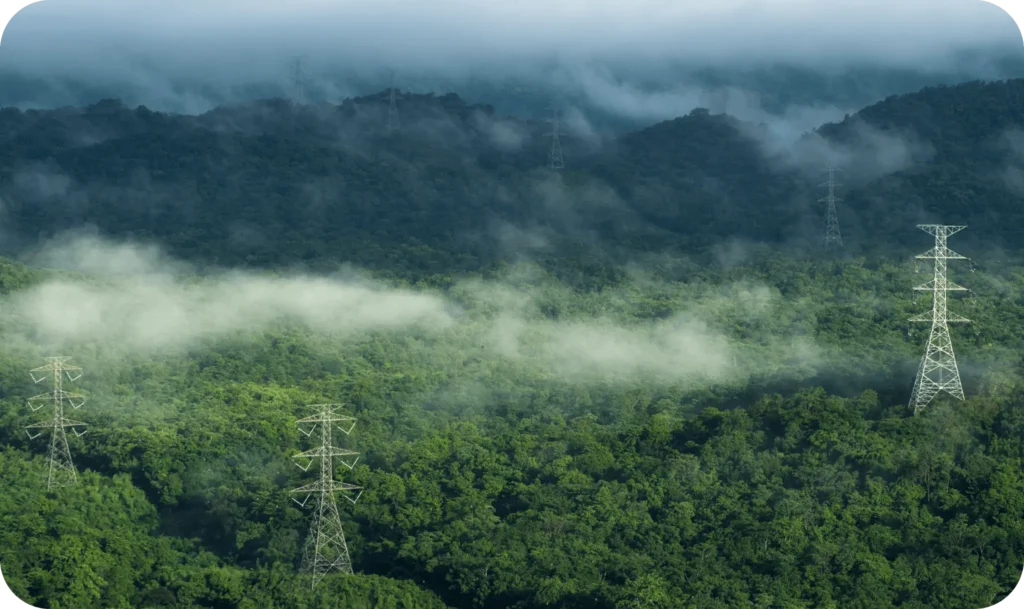
In forestry, the development of a digital forest stack represents a significant leap forward for governments and related stakeholders. This innovative platform can centralize data on forest resources, health, and management, enabling sustainable practices, supporting the livelihoods of forest communities, and providing valuable information for allied industries dependent on forest products.
Insurance and Reinsurance
De-Risking Agricultural Insurance with Satellite-Driven Intelligence
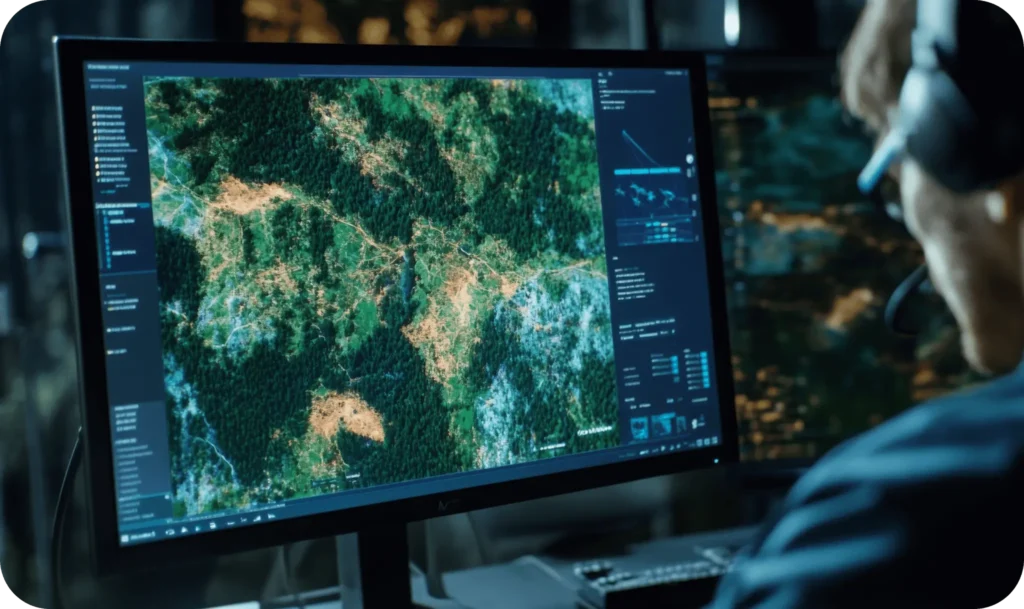
SatSure empowers insurers and reinsurers with real-time crop intelligence, yield forecasts, and post-disaster assessment tools—enabling smarter underwriting, efficient claims validation, and scalable risk management across geographies